by Sydney B.
When you look at a call for art, you may see a directive that says something like “Art must be wired for hanging.” Typically galleries and art spaces have strict standards for how a work is prepared before it’s dropped off for a show. This could be for the gallery’s particular display system, ensuring the artists’ work stays securely in it’s frame and on the wall, cleanliness, or organization. It also encourages the artist to put thought into how their work will be displayed and viewed. The hardware that sometimes comes pre-attached to picture frames is simply not up to par for most galleries. Here’s a quick guide on how to quickly and easily wire a frame properly for exhibits.
Equipment:
- Awl, sturdy tack, or a drill for making a pilot hole into sturdy frames
- Screwdriver
- Wire cutters
- (Optional alternative) Heavy duty stapler – Available in the Library of Things
- Ruler
- Pencil
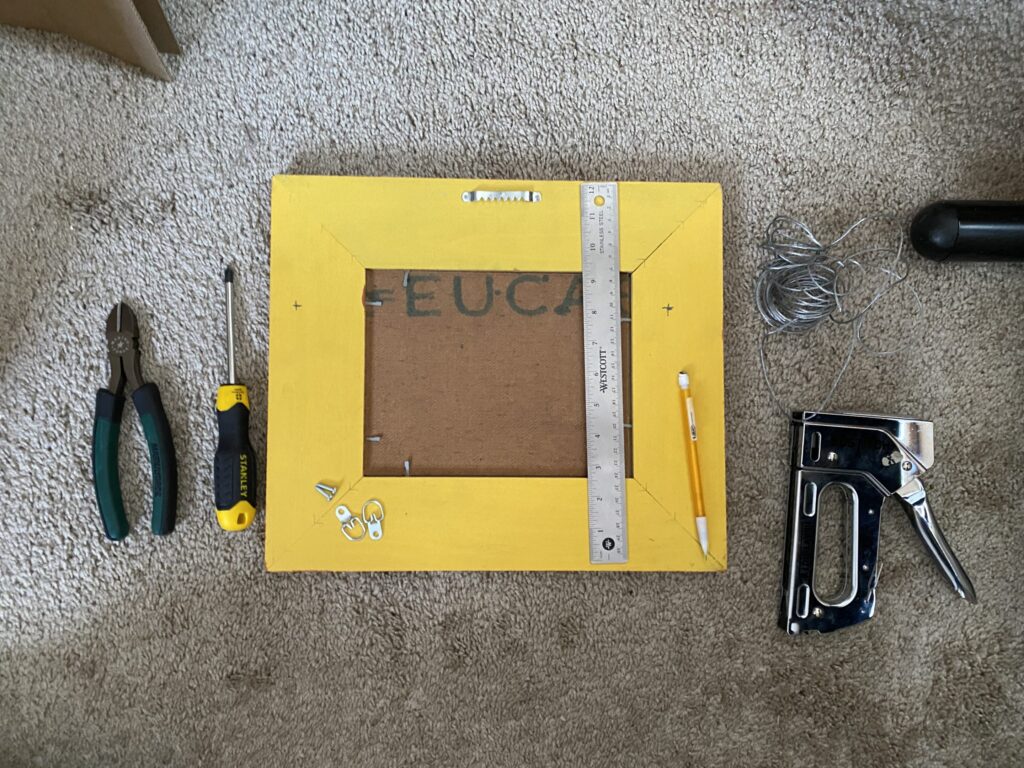
You can find most of these in Ignite Studio for use in the space.
Hardware:
- D-ring hangers & screws
- Wire
You will need to purchase these things before visiting Ignite. Make sure the screws that come with the D-rings aren’t longer than the thickness of your frame.
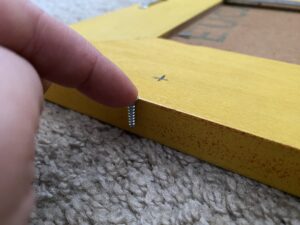
Make sure the screws from the D-ring hangers are the appropriate size for the width of your frame.
How to Wire Frames for Hanging
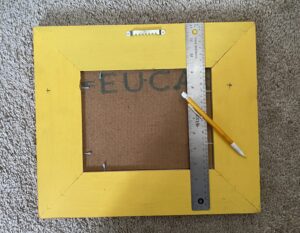
Measure 1/3 of the way down your frame. You can do this by eyeballing it or by measuring the length of your frame and dividing that measurement by 3. Use a pencil to make a guide mark on both the left and right sides of the frame. The frame in this example is 12 inches tall. 1/3 of the way down would be 4 inches from the top.
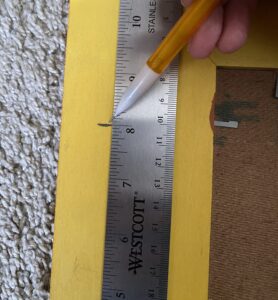
Use a drill bit to create a pilot hole at an appropriate size for your hardware. Depending on the material of your frame you may also be able to do this with a pin or an awl. You will want to take care to not accidentally go all the way through the frame!
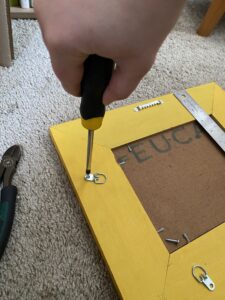
Place one of the D-ring hangers with the flat side down above the pilot hole and then put a screw through that so that the hanger will be anchored in place. Make sure the “D” shaped part is facing in, towards the middle of picture, and not out towards the edge. Use a screwdriver to tighten the screw into the hole. Repeat for the other side.
Slip the end of the wire through the “D” so you have 3-4 inches of wire through. Bend the wire so you can knot it on itself.
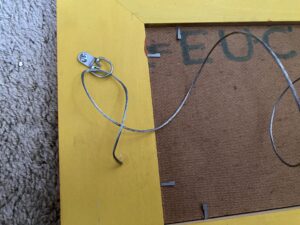
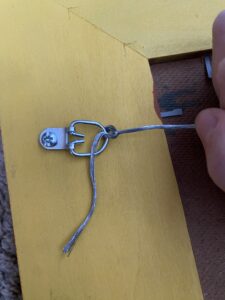
Tie a knot before wrapping the excess wire around itself.
Then wrap the excess up the length of the wire. Repeat for the other side.
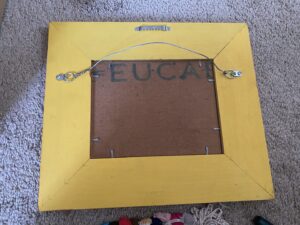
The wire shouldn’t be taut between the two D-rings – you will want to leave a little bit of slack so that the frame will hang away from the wall at a slight angle, but not so much that the wire is visible from behind the frame, or so much that the frame leans too far away from the wall.
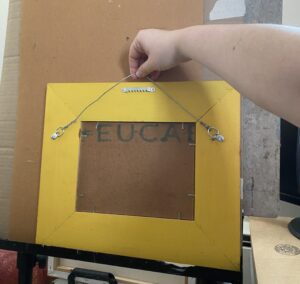
Too much slack between the D-rings will make your frame lean away from the wall and will show the wire where hung.
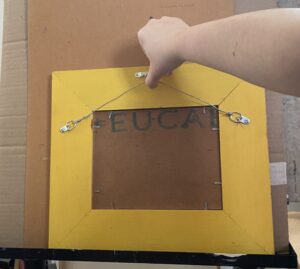
A mostly taut wire will help keep the frame flat against the wall and hide the hanging mechanisms.
Wiring Smaller Frames
If the frame you have is too small in width to accommodate a screw you can likely use a heavy-duty stapler in place of the D-ring hangers. This will only work for thin, light frames. Staples are not a safe way to hang work that is much heavier than 5 lbs total.
Measure the frame the same way described above. Make marks with a pencil 1/3 of the way from the top of the frame.
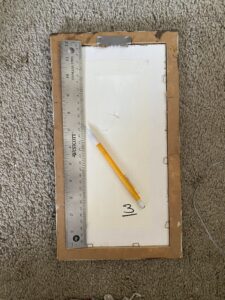
Line up a wire with some inches of excess over the pencil mark. Use a heavy-duty stapler to attach the wire to the frame.
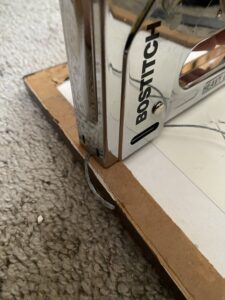
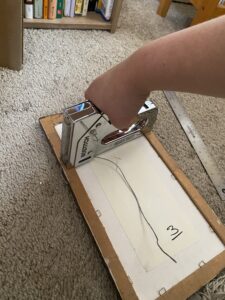
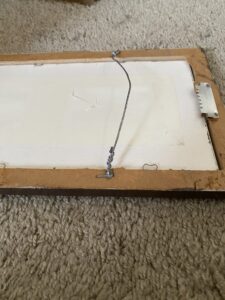
Knot the wire and wrap the excess around itself. Repeat on the other side.
Tips for Wiring
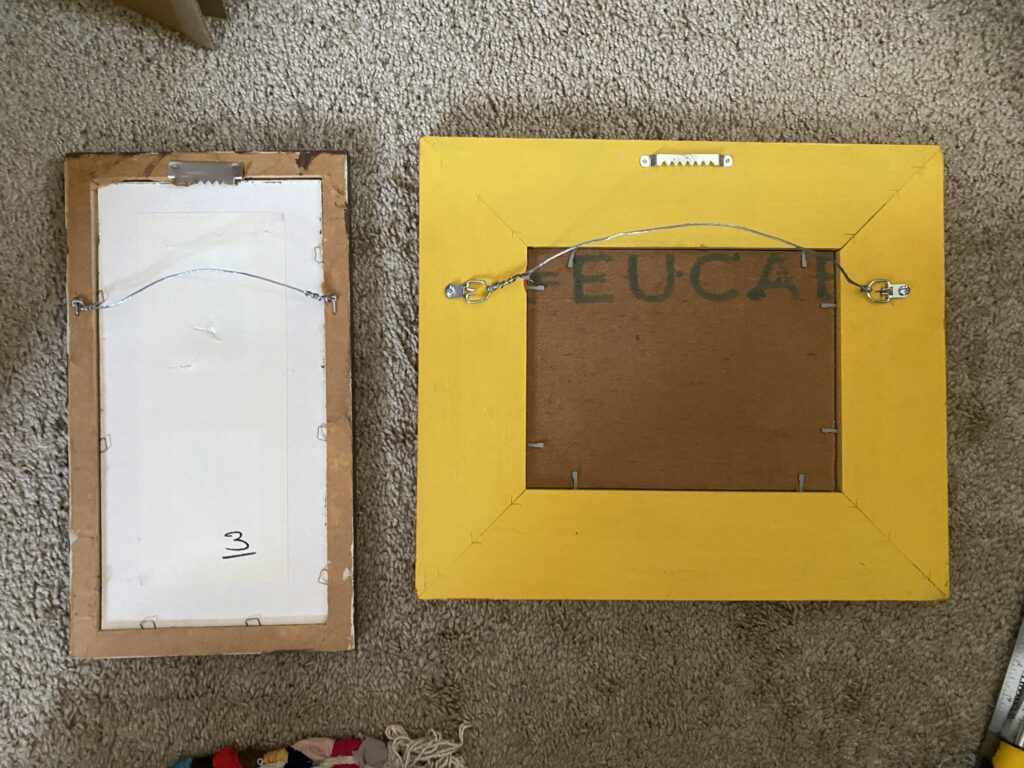
- Don’t wire between the triangle-shaped hangers on the backboard of a frame. All of the weight will be put on the backboard, which might bend or slip out of the frame, which would leave your art and glass on the floor.
- Don’t guess on hardware – take notes of your frame’s weight and measurements before purchasing
- hardware to avoid wire that’s not strong enough for the weight of your frame, or hardware that may be too long for the thickness of your frame.
- This type of wiring also works for canvases – just attach the D-ring hangers directly to the back of the canvas stretcher. For larger works or works of unusual size, you may need to upgrade to an even more secure gallery hanger, or check with the curator of your local show to see if they have alternative arrangements for oversized work.
- For very light or small frames, and especially for instances where even the shortest screw included with D-rings will protrude out from the other side of your frame, you may be able to use a heavy-duty staple. Staple the wire in place on both sides at the appropriate height, then knot and wrap the wire on itself.
- Wire types:
- Braided: Up to 36 pounds
- Stainless steel: Up to 100 pounds
- Vinyl-coated: Up to 60 pounds
Hopefully this guide will help you prepare your work for professional shows. Your next step would be making a mat for your artwork – learn how to use Ignite’s mat cutter in our other blog here. Happy making!