by Kenzye P.
One of the most popular kits in Ignite Studio is acrylic painting! These kits have recently gone through an upgrade that encourages the art of color mixing, a main component in the practice of painting. These changes facilitate a deeper understanding of the ways that colors work in tandem to create a finished piece. The new version of the kits come with only 7 colors- red, yellow, blue, green, purple, white, and black. The specific shade of each color was chosen based on its pigment bias.
WHAT IS PIGMENT BIAS?
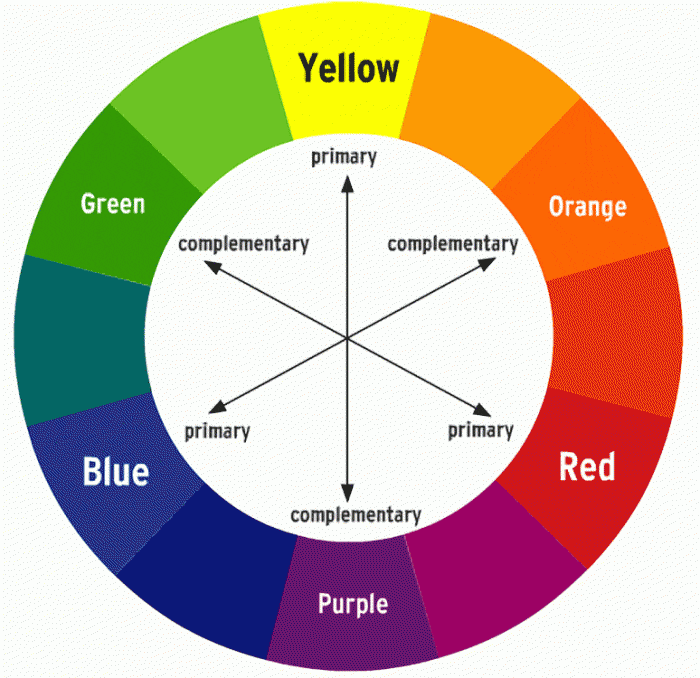
Pigment bias is the tendency for a color to lean warmer or cooler because another color is naturally present underneath. For example, colors that are in the yellow family will present either a blue (cool) or red (warm) undertone that causes the color to lean more in one direction. A color will generally have a bias towards one of its neighbors on the color wheel. For example, Greens will lean more yellow (warm) or blue (cool).
HOW TO MIX WITH PIGMENT BIAS IN MIND?
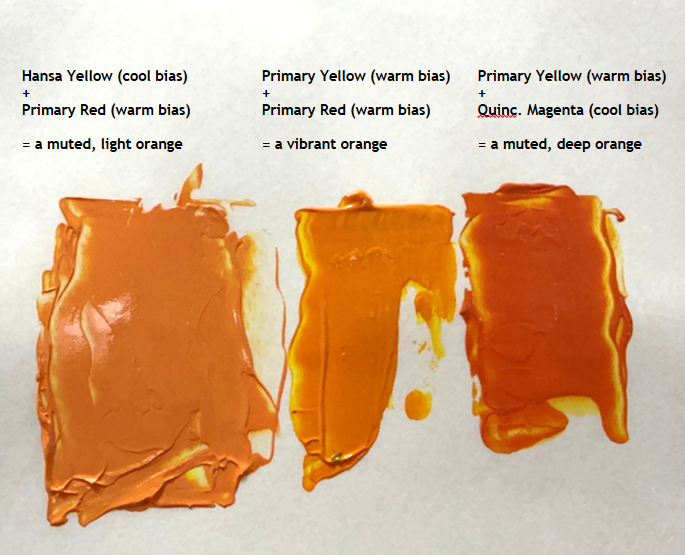
You can find a great blog on the generics of color mixing in our blog here. When color mixing with pigment bias in mind, matching colors whose bias lean towards each other will always create a “cleaner”, less “muddy” color overall. A yellow that leans towards red and a red that leans towards yellow will create a bright, clear orange because they both share a warm bias (see the image below).
To better accommodate the bias of colors, all the primaries provided in the kit have a warm bias to ensure clean, clear mixing. This allows the mixing of warm hues from the existing primaries to fill out the color wheel. The kit also includes cool varieties of green and purple to further round out color options that would be harder to achieve using the primary colors with a warm bias. Use small amounts of Titanium White and Mars Black to create various tones and shades of different hues. Mars black is an opaque black with a warm brown undertone which means a small amount goes a long way. Mixing shades before starting a painting can aid in developing a cohesive palette.
HOW TO RECOGNIZE PIGMENT BIAS?
Determining whether a color has a warm or cool bias starts with understanding the pigments themselves. All paint tubes are listed with a pigment letter and number that is standard across all brands and types of paint. This pigment code is usually listed on the back or side of the bottle near the information about a color’s lightfastness and opacity. The pigment code will tell you what color family a hue belongs to as well as its potential undertones. In the case of our Dioxazine Purple, the code “PV23 RS” tells us that this is a red shade of this violet pigment number 23. Full lists of pigment colors and codes are available online in various location. Artist Pigments is an online database for all color codes that also provides lists of brands that share pigment formulas.
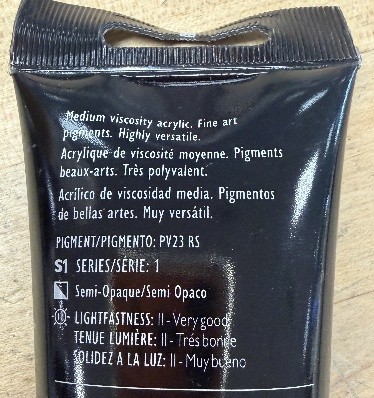
There are very few colors that exist as true representations. If a tube doesn’t list the variant of its hue, you can also tell by holding the color close to a warm hue and next to a cool hue to determine where its bias leans. You can also uses databases like Artists Pigments to aid in identifying a colors bias.
WHAT ELSE IS NEW?
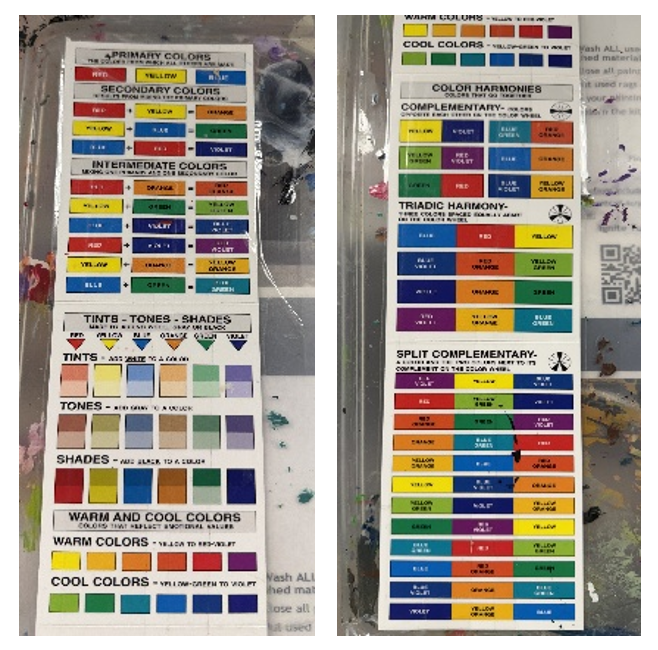
Each kit now includes a color mixing guide on the top of the box. These guides provide a clear understanding of tone (hues with white), shades (hues with black), and color relationships. You can use these guides to learn how to mix certain colors, analyze color combinations, and experiment with new methods of mixing.
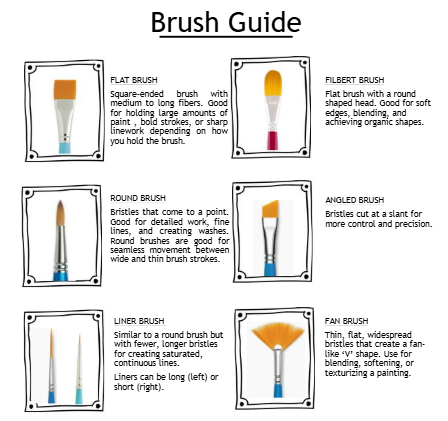
In addition to the mixing guide, each kit now includes brush shape guides. Each brush has a particular purpose and texture that will lay down paint in a unique way. Use this guide to better understand the different shapes that exist, their purpose, and play around with how each style of brush works for your own artwork. Looking for a specific size and style of brush or palette knife? Ask one of our staff members!
Come on down to Ignite Studio in Fishers to explore the newly updated Acrylic Painting Kit and try your hand at mixing your own color palette. Be sure to share your creations on Ignite Community Discussion Board. Happy Making!